
Whether it’s an energy meter, an industrial DTU, an IoT controller, or any high‑reliability electronic device, every successful OEM/ODM project goes through the same engineering journey: EVT, DVT, and PVT.
These three stages determine whether a product will be stable, manufacturable, and reliable in real‑world conditions. Here’s a clear breakdown from an OEM/ODM manufacturing perspective.
1. EVT — Engineering Validation Test
Goal: Validate the core design and functionality
EVT is where the engineering team confirms that the product concept works as intended. Typical EVT validation includes:
- Power and signal integrity
- MCU/SoC performance and firmware bring‑up
- Communication interfaces (RS485, CAN, Ethernet, wireless modules)
- Thermal behavior under load
- Safety and protection circuits
- Early mechanical fit checks
EVT samples are usually hand‑built or low‑volume. This is the stage where most design changes happen.
2. DVT — Design Validation Test
Goal: Validate reliability, durability, and compliance
DVT ensures the design can survive real‑world usage and environmental stress. For complex electronics, this includes:
- Temperature cycling and aging tests
- EMC/ESD/EFT immunity
- Long‑duration communication stability
- Mechanical stress tests
- Firmware stability and edge‑case handling
- Enclosure tolerance and assembly verification
This is also where certification preparation begins (CE, FCC, EMC, safety, etc.).
DVT ensures the product is not only functional, but reliable.
3. PVT — Production Validation Test
Goal: Validate the manufacturing process
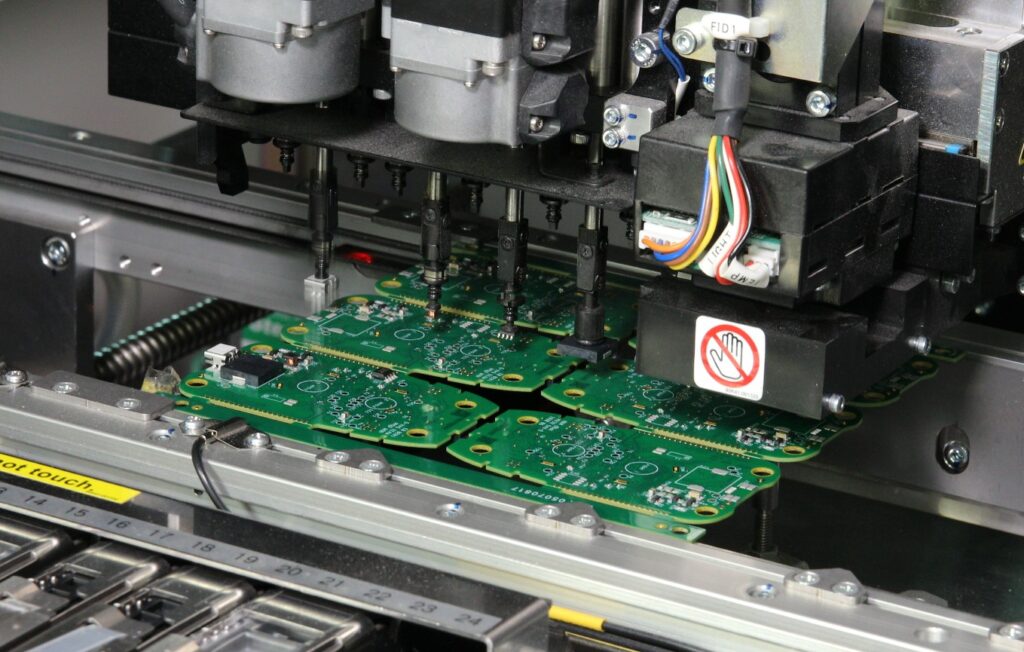
PVT focuses on whether the product can be produced consistently at scale.
Key PVT activities include:
- SMT line capability (SPC, Cpk)
- AOI / ICT / FCT test coverage
- Calibration and programming process
- Assembly SOP verification
- Packaging and labeling
- Yield rate analysis
- Pilot run (small batch)
If PVT passes, the factory can confidently move to mass production.
PVT ensures the product is repeatable, not just “working once”.
⭐ Why EVT/DVT/PVT Matter for OEM/ODM Projects
Complex electronics face challenges such as:
- High temperature and humidity
- Electrical noise
- Continuous 24/7 operation
- Mechanical stress
- Firmware edge cases
- Component variation
Skipping or rushing EVT/DVT/PVT leads to:
- Field failures
- Communication instability
- Accuracy drift
- High RMA rate
- Production yield issues
A strong EVT/DVT/PVT process ensures:
- Stable performance
- Reliable communication
- Long‑term durability
- Smooth mass production
- Lower maintenance cost
🎯 Conclusion
EVT validates the design. DVT validates reliability. PVT validates manufacturability.
These three stages form the backbone of every successful OEM/ODM electronics project — whether it’s an energy meter, a DTU, an IoT device, or any industrial‑grade electronic product.
To learn more about our OEM/ODM development capabilities, visit our OEM/ODM Services page. https://blitech.co/services/
https://en.wikipedia.org/wiki/Engineering_validation_test